Customized Simplex OS2 LC/SC/FC/ST/LSH Industrial Armored Fiber Optic Pigtail
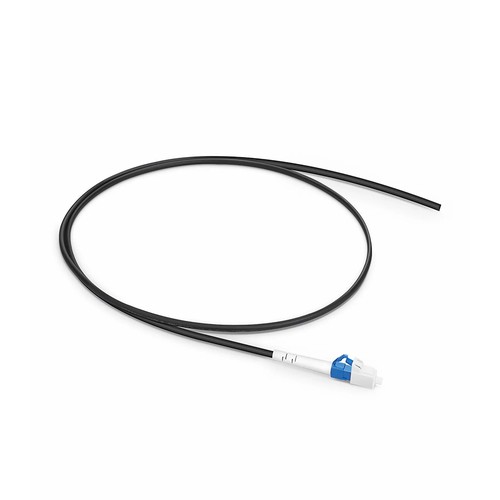
For Tanzanian site work, correct product selection should be followed by careful transport, connector inspection and retention of the fiber records. This customized pigtail platform is built to the ordered setup: OS2 fiber mode, connector series, polish, jacket rating and length are all confirmed before fabrication. Because every leg is factory terminated, polished and optically tested, the splice point inherits a connector end face that field polishing cannot match. The armored build adds crush and rodent protection for routes that leave the safety of the tray.
Product Highlights
- Available with LC, SC, FC, ST, LSH Connectors
- For Harsh Environments Including Building Sites, Industrial Networks, Roadworks
- Operating & Storage Temperature Up to -40~80°C
- TPU Jacket Features Water, Abrasion, Low-temperature Resistance
- Helical Steel Armor Provides Additional Crush and Rodent Protection
Specifications
| Connector A | LC/SC/FC/ST/LSH UPC/APC Simplex |
|---|---|
| Connector B | Unterminated |
| Fiber Count | 1 Fiber |
| Fiber Grade | G.657.A2 |
| Fiber Mode | OS2 9/125μm |
| Wavelength | 1310/1550nm |
| Jacket Color | Black |
| Cable Jacket | TPU (Thermoplastic Polyurethane) |
| Crush Resistance (Long/Short Term) | 1000/3000 N/100mm |
| Tensile Strength (Long/Short Term) | 200/400N |
| Attenuation at 1310nm | 0.36dB/km |
| Attenuation at 1550nm | 0.22dB/km |
| Insertion Loss | ≤0.3dB |
| Return Loss | UPC≥50dB, APC≥60dB |
| Operating Temperature | -40 to 80°C (-40 to 176℉) |
| Storage Temperature | -40 to 80°C (-40 to 176℉) |
From raw fiber route to documented port
Every structured cabling plant ends the identical way: a cable arrives at a frame, and its fibers must become ports. The pigtail is the component that makes that conversion. Spliced into a tray and presented on a panel, each strand gains a connector with a known optical signature, a location in the documentation and a place in the test record. That conversion - cable to port - is where connection quality is won or lost.
Mechanical splicing as the field fallback
Where a fusion splicer cannot be regarded as supplied, mechanical splices get the connection up: the strand cleaves, seats in the mechanical splice body and locks against the field fiber. Because the loss is higher than a fusion joint and the reflectance worse, the practice is a fallback rather than a standard - but for urgent restoration work a pigtail that supports both methods keeps the choice open.
Ordering a customized pigtail platform
The customized platform turns a catalog of options into one ordered setup: connector series from LC, SC, FC, ST and LSH; polish as UPC or APC; jacket rating to suit the path; length to the measured run; and fiber count where the platform offers it. State the combination with the request and the factory confirms the manufacturable specification before fabrication. The delivered pigtail then matches the rack-mounted panel hardware, the tray geometry and the path without field improvisation.
Configuration choices that matter at the tray
Three choices decide how a customized pigtail behaves at the splice point: the connector being used series should be matched to the rack-mounted panel adapters, the polish discipline should be matched to the plant - mixing UPC and APC at one mating point destroys return loss - and the jacket rating must satisfy the pathway code. Getting these right at order time is faster than any field correction, and the factory test report then applies to the precise delivered setup.
Armored pigtails for exposed routes
Standard 0.9mm strands survive inside trays and enclosures; routes that cross open trays, cabinet floors or retrofit pathways need more. The armored constructions wrap the fiber in helical steel - and in the industrial versions a TPU jacket - adding crush resistance, rodent protection and abrasion tolerance while keeping the supplied assembly flexible sufficient to dress. The splice end still presents a standard prepared strand; thus, tray practice does not automatically change.
Bend-insensitive glass in dense trays
Splice trays and panel rear spaces punish fiber: tight routing, crowded dressing and the occasional hurried re-entry all bend strands beyond what legacy single-mode tolerated. The bend-insensitive grade used in this pigtail holds attenuation stable at bend radii that would fog conventional glass, which keeps the connection margin intact after the tenth tray opening, not just at commissioning.
Sparing and kit planning for termination work
Pigtails belong in the termination kit in counted sets with spares: strands break, connectors get contaminated beyond recovery, and a missing spare converts a ten-minute task into a second visit. Plan one spare set per frame location, keep spare strands capped and bagged, and record which set went into which tray so replacement stock may generally be ordered to the identical specification.
A splicing workflow that scales
Productive termination crews work to a fixed routine: mount the tray, dress the supplied cable, splice the pigtails color by color, protect each joint, test each completed port, then close and label. With the routine fixed, a two-person crew terminates a full frame location in a predictable time, and the test record maps cleanly onto the documentation. The consistency further makes quality auditable - identical materials, identical sequence, identical pass criteria across every site.
Selecting the right pigtail for the job
Five decisions define the order: the connector being used series should be matched to the rack-mounted panel, the polish should be matched to the plant, the fiber mode should be matched to the supplied cable, the build should be matched to the path, and the count should be matched to the tray capacity. Getting all five right at order time is what turns a box of strands into a dependable termination. Where the specification sits outside the standard configurations, the customized platforms cover the remaining combinations.
Factory Quality Control and Testing
Every pigtail is optically tested before packing: insertion loss and return loss are verified on each terminated leg, and the ferrule end faces are inspected for scratches and contamination. The strands ship coiled, capped and bagged, with the test results supplied on order.
Purchase and Factory Support
Refer to this pigtail by connector, polish, fiber mode, fiber count and build when purchasing a quotation. For configurations outside the listed options - mixed connector families, jacket ratings, lengths or project packaging - send the specification with the request and the factory will ensure the manufacturable specification. For Tanzanian deliveries, the order details should include any site identification needed by the installation team.


